I. Introduction to USB-C 240W Fast Charging
USB PD 3.1 EPR supports up to 240W. The charger and device must support and negotiate the required power, and the cable must have the appropriate EPR power rating. A phone’s proprietary 240W fast charging is a separate system; the same wattage does not establish USB PD compatibility.
II. Development of 240W Fast Charging in the Smartphone Industry
A separate example is realme’s GT3, announced in 2023 with 240W SUPERVOOC and a custom 12A charging cable. This is a manufacturer-specific charging system. Its 240W rating alone does not establish support for USB PD 3.1 EPR, and its charging results cannot be applied to other phones or charger-and-cable combinations.
III. Key Components for USB-C 240W Fast Charging
A. Chargers
GaN can help designers reduce power-conversion losses and build compact adapters, but size and thermal performance depend on the complete design, as explained by Texas Instruments. For a USB PD 3.1 EPR charger, check the manufacturer’s model-specific output profiles, single-port power and power allocation when multiple ports are used. Confirm support for the required profile with the connected device and cable; dimensions, weight, compatibility and sustained output require the model’s specifications and test conditions.
B. Charging Cables
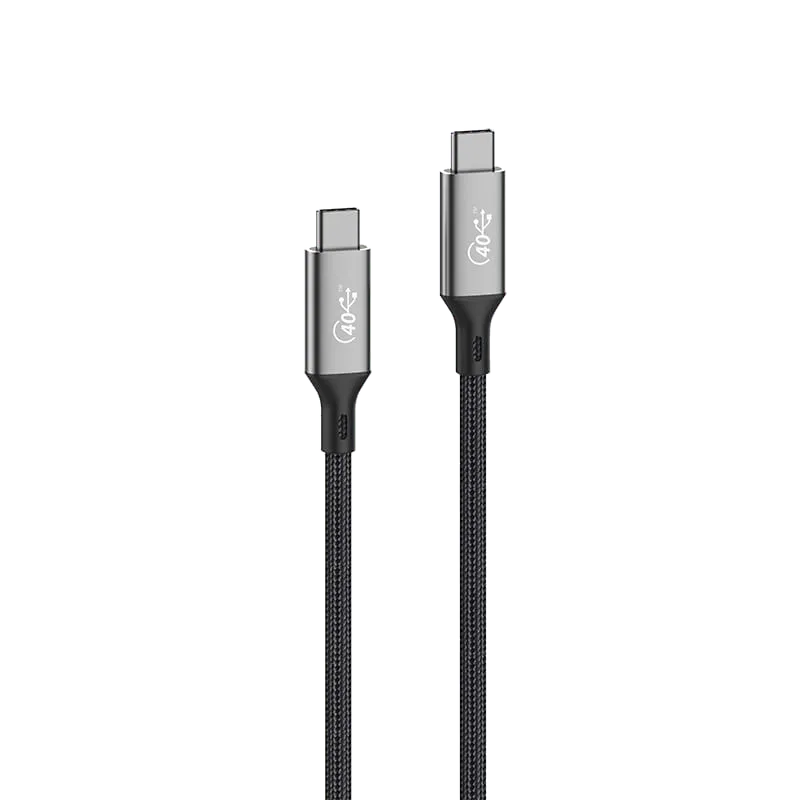
For a USB-C charging cable, check the manufacturer’s specifications for the selected model and length: connector types, rated power and supported data rate. USB-IF explains that cables have different capabilities. Do not assume that a USB PD EPR cable and a phone maker’s proprietary high-current charging cable are interchangeable; confirm compatibility with the intended charger and device. Conductor gauge, cross-section comparisons and connector surface treatment require the model’s drawing or test report; a wattage label alone does not establish them.
C. Chips
Infineon describes EZ-PD PMG1-B2 as integrating a 55V buck-boost battery-charge controller. Leadtrend lists LD6618 as a USB Type-C power-source PD controller. Component support alone does not establish a complete 240W charging system. Verify the full design, firmware, charger, device and cable against the intended power requirements.
IV. Advantages and Challenges
A. Advantages
- Charging time: Check the exact phone model, compatible charging protocol, charger, cable and manufacturer test conditions. A 240W charger rating alone does not guarantee a full charge in a few minutes. See the realme GT3 test notes.
- Charging during a break: The charge gained during a short break depends on the device, battery state, charging system and operating conditions. Check the manufacturer’s test conditions; a 240W rating alone does not guarantee a full charge or enough charge for a particular task.
- Using multiple devices: For each phone, laptop, tablet or portable device, verify the supported charging protocol and input power, and the compatible charger and cable. A USB-C connector or 240W rating alone does not establish compatibility or actual charging power.
B. Challenges
- Battery life: Assess ageing for the exact battery and charging system, including its temperature history and charging pattern, as Apple advises. realme reports a laboratory capacity-retention result for the GT3; this result does not establish the life of every 240W device. Request the selected model’s cycle-test procedure, temperatures, charging profile and capacity-retention criterion rather than inferring life from rated charging power alone.
- Thermal management: Check the manufacturer’s thermal design and operating conditions for the exact model. For example, realme describes a VC cooling system for the GT3; this model-specific example does not establish that fans or liquid-cooling layers are required for every 240W charging device. For the selected charger, device and cable, request temperature-rise and sustained-power test records under the intended ambient and load conditions.
- Cost evaluation: TI PMP41115 provides a bill of materials and test report for one 240W reference design, not a quotation for your product. Request an itemised quotation for the selected charger and cable, specifying model, quantity, cable length and data rate, testing and certification scope, and any one-off development or tooling fees. Compare equivalent specifications and commercial terms; a 240W rating alone does not establish the price or market adoption.
V. Market Application and Future Trends
A. Market Application
- Smartphones: OPPO lists 67W SUPERVOOC charging for the Reno9 (PHM110), not 240W. Charging capability must be checked for the exact phone model and its supported protocol; a charger’s 240W rating does not make that phone charge at 240W.
- Laptops: Check the exact model, supported input power and charging connection. For example, Apple lists a 140W USB-C power adapter with a 240W USB-C charge cable for fast charging the 16-inch MacBook Pro introduced in November 2023 or later. The cable rating does not mean the laptop charges at 240W; charging time depends on the model and test conditions.
- Portable devices: For a tablet, power bank or portable audio-visual device, verify its input and output roles, supported charging protocol and power, and compatible charger and cable. USB-IF explains that USB PD devices negotiate the power they require. A 240W label alone does not establish device compatibility or charging speed.
B. Future Trends
- Application planning: USB-IF describes USB PD 3.1 support for power delivery up to 240W. This technical capability alone does not establish market adoption or future prices. For procurement, check the exact device’s charging protocol and supported power, the compatible charger and cable configuration, and supplier-confirmed availability and lead time for the destination market.
- Wired and wireless charging: WPC publishes the Qi wireless charging standard, while USB-IF defines USB PD power delivery over USB-C cables. A wired 240W rating does not establish wireless charging power or battery-system performance. For a product combining these functions, verify each function’s protocol, rated power and test records for the exact model.
- Safety and reliability verification: USB-IF states that a certified cable does not replace certification of USB products. A 240W rating alone is not a system-wide safety guarantee. For the exact charger, device and cable combination, request protection specifications and relevant test reports, including the tested load, temperature and operating conditions.
VI. Conclusion
When selecting a 240W charging system, distinguish USB PD 3.1 EPR from proprietary fast-charging protocols. The actual power and charging time depend on the specific device, charger, cable and operating conditions; a USB-C connector or 240W rating alone does not establish compatibility or 240W charging. Before procurement, request the model-specific specifications and test records for the selected configuration.
