Introduction
In the era of new energy vehicles, the demand for in-car entertainment and convenience keeps increasing. A full-function USB-C data cable that can simultaneously perform screen mirroring and charging has emerged as a revolutionary product. It not only meets devices' power needs but also provides a seamless screen-mirroring experience, greatly improving the in-car experience.
Compatibility with Multiple Brands and Models
One of the most remarkable features is its wide compatibility. It works with many phone brands, including Apple, Huawei, OPPO, Xiaomi, vivo and Honor. For Apple devices it supports the CarPlay protocol for stable screen mirroring and data transmission; for Android devices it is compatible with car-connectivity functions such as Huawei HiCar, Xiaomi CarWith, OPPO Car+ and vivo Jovi InCar.
In terms of vehicle models, it has excellent adaptability—whether luxury cars like Mercedes-Benz, BMW and Audi, or more common models like Volkswagen and even the Wuling Hongguang EV, the cable is recognized without problems. In one test, connecting an iPhone to a 2023 Mercedes-Benz C-Class made the CarPlay interface pop up automatically, and connecting a Huawei Mate 60 to a BMW 3-series connected HiCar instantly.
Smart Shunting and Independent Control Technology
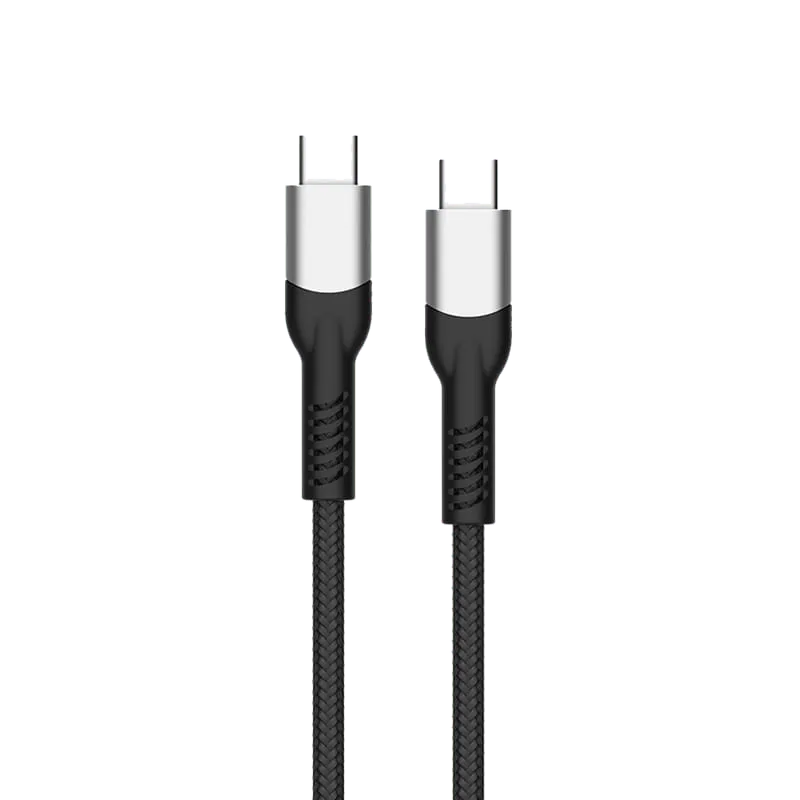
To achieve simultaneous screen mirroring and charging without interference, this cable uses a "smart shunting chip + dual-channel independent control" design. Different data and power transmission channels can be independently controlled, ensuring the screen-mirroring process is not affected by charging, and vice versa. For instance, when the left Type-C port connects to an iPhone, it outputs stably through CarPlay; meanwhile, the right Type-C port can connect to a Huawei Mate 60 and enable Huawei SCP flash charging. In a real-world test, within 30 minutes both devices charged up to 38% of their battery capacity, and screen mirroring was extremely smooth—even during continuous 2-hour navigation, music playback and incoming-call switching on a congested elevated outer-ring road, with zero lag and zero disconnection.
High-Speed Charging Performance
The cable supports PD (Power Delivery) and other fast-charging protocols such as PPS (Programmable Power Supply) and QC (Quick Charge). Some cables even support up to 120W PD fast charging. This high-power charging lets devices charge quickly, which is important for long-distance driving or when a device's battery is running low. Compared with ordinary charging cables, which may slow significantly when performing other tasks simultaneously, this cable maintains a relatively high charging efficiency—even during screen mirroring, it can still charge at a fast rate.
Stable Screen Mirroring Experience
The screen-mirroring function is very stable, transmitting high-definition data in real time so users can operate their phones on the car's display—navigation, music playback or making calls, all done smoothly on the car screen. In an in-car environment, stability is crucial; this cable effectively avoids screen freezing, lag or disconnection often encountered with wireless screen mirroring. For example, OPPO phone users can operate navigation, music and calls on the car screen without hassle, greatly improving driving safety and convenience.
Durability and Quality Assurance
The cable is made of high-quality materials, and its interfaces are designed to be wear-resistant. In a test, after being plugged and unplugged 500 times, the connection was still firm. Its high-quality construction ensures long-term use in complex in-car environments, withstanding frequent bending, pulling and temperature changes without being easily damaged—making it a reliable accessory for new energy vehicle users.
Practical Scenarios and User Benefits
The cable has a wide range of practical scenarios. For family trips, parents can charge their phones while projecting navigation on the car screen, while children charge their tablets and watch videos on the car screen. For business people, they can connect their phones to access work-related information and make calls during the journey. Overall, this cable solves the problems of device charging and screen mirroring in the car, making the in-car experience more comfortable, safe and enjoyable—an essential accessory for new energy vehicle owners, whether for daily commuting or long-distance travel.