How to Choose a USB Cable: B2B Sourcing & Selection Guide
Selecting the correct USB cable sounds simple, but the variety of standards, connector types, and performance specifications can make the decision complex, especially for high-volume OEM and distribution buyers. This guide walks you through the key criteria to ensure you source cables that meet your application, quality, and compliance needs.
Understanding USB Standards: Speed and Power
USB cables come in different generations, each offering different data transfer speeds and power delivery capabilities:
- USB 2.0: Transfer rate up to 480 Mbps. Suitable for legacy devices, printers, and low-bandwidth peripherals. Most cost-effective option for simple data and charging.
- USB 3.0: Transfer rate up to 5 Gbps (5,000 Mbps). Required for external hard drives, video equipment, and modern high-speed devices. Backwards compatible with USB 2.0 ports.
- USB 3.1 and USB 3.2: Higher-speed variants (10–20 Gbps). For professional video, data centres and high-performance computing.
Choose your standard based on the end device's capability. Upgrading beyond your device's need adds cost without performance gain.
USB Connector Types: Which One Do You Need?
USB cables are defined by their connectors on each end. The most common combinations are:
| Connector Type | Common Use | Key Notes |
|---|---|---|
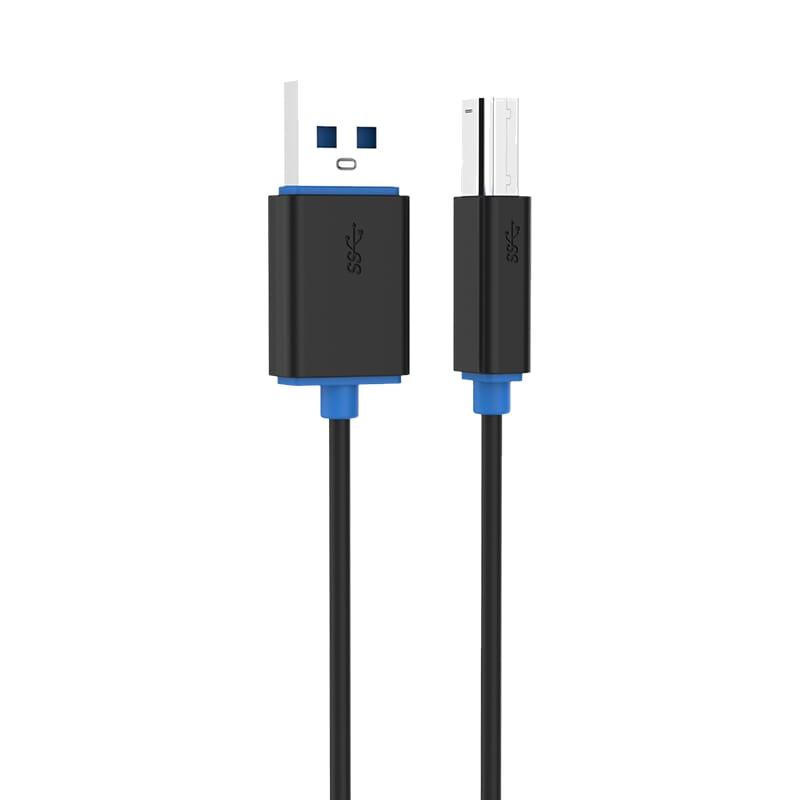
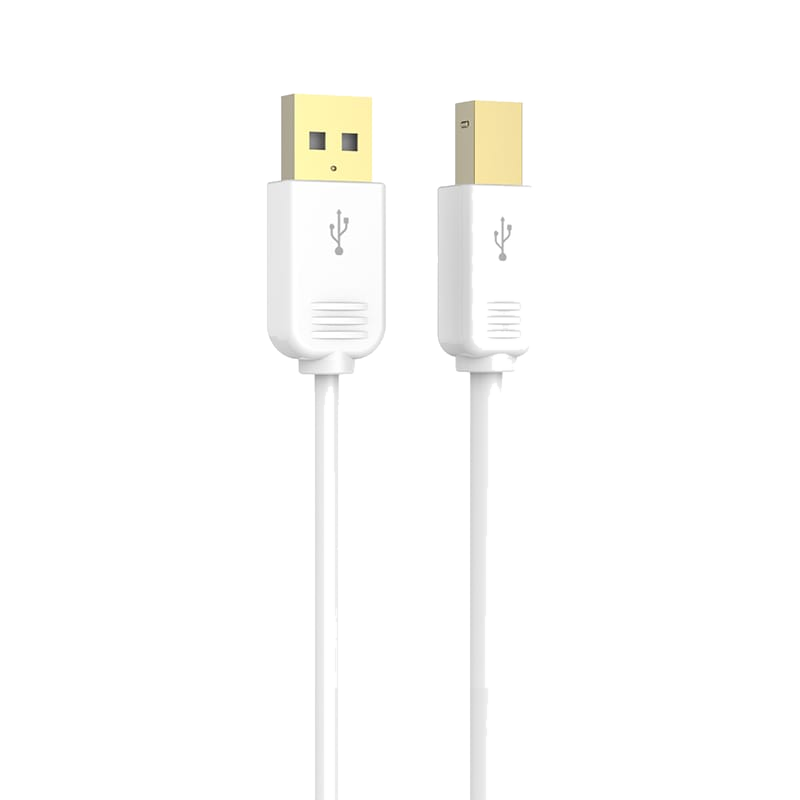
| Type-A to Type-B (2.0 & 3.0) | Printers, scanners, external hard drives | Standard for peripheral connections. Directional connectors (cannot be reversed). |
| Type-A Male-to-Male (2.0 & 3.0) | Hub extension, device chaining | Less common; verify device compatibility. |
| USB-C to Type-A (3.0) | Modern devices, OTG (on-the-go), tablets | Reversible connector; supports high-speed data and power delivery on compatible cables. |
| USB-C to USB-C | Phones, laptops, modern peripherals | Reversible; industry standard for power and data. Often supports USB Power Delivery (PD). |
Verify your equipment's ports before ordering. Connector mismatch is the most common sourcing mistake.
Cable Materials and Build Quality
The physical construction affects durability, signal integrity, and end-user experience:
- Cable jacket material: PVC (polyvinyl chloride) is standard, cost-effective, and flame-retardant. Premium alternatives like nylon offer better flexibility and durability for high-use environments.
- Conductor: Oxygen-free copper (OFC) minimizes signal loss and is preferred for long runs and high-speed (3.0+) applications.
- Connector shell: ABS plastic is lightweight and suitable for standard use. Molded connectors integrate the cable jacket for better strain relief and durability.
- Gold plating: 24K gold-plated connectors improve corrosion resistance and signal integrity, especially valuable for high-reliability or marine/industrial environments.
For high-volume orders, specify these materials upfront to align quality expectations with price.
Certifications and Compliance
When sourcing USB cables for resale or integration, verify compliance with mandatory standards:
- USB-IF (USB Implementers Forum): Membership confirms adherence to USB standard specifications.
- CE Mark: Required for sale in Europe; confirms electromagnetic compatibility.
- RoHS & REACH: EU directives limiting hazardous substances. Essential for European and export markets.
- FCC (US): Electromagnetic compatibility certification required for US distribution.
- ISO 9001: Quality management system certification; indicates consistent manufacturing and testing.
- UL Rating: Available on request for high-safety applications (medical, aerospace).
Confirm all applicable certifications with your supplier in writing before placing orders.
Cable Length and Connector Orientation
Practical considerations include:
- Length: Standard lengths are 1.8 m, 3 m, and 5 m. Longer cables may introduce signal degradation at USB 3.0+ speeds. Contact us for custom lengths.
- Straight vs. angled connectors: Angled connectors reduce strain on devices in tight installations but may not fit all port layouts.
- Connector count: Some applications require multiple identical cables; bulk orders can reduce per-unit cost.
Tonetron USB Cable Selection
Tonetron offers a range of certified USB cables in both USB 2.0 and USB 3.0 standards, with multiple connector configurations:
| Model | Standard | Connector Type | Cable Color | Shell Material | Key Features |
|---|---|---|---|---|---|
| MP366 | USB 2.0 | Type-A to Type-B | White | ABS | 24K gold-plated connectors, OFC conductor, 480 Mbps |
| PB466 | USB 2.0 | Type-A to Type-B | Black | Molded | Standard printer cable, molded connectors |
| MP369 | USB 2.0 | Type-A Male-to-Male | White | ABS | 24K gold-plated, OFC conductor, hub extension |
| PB469 | USB 2.0 | Type-A | Black | Molded | General-purpose USB 2.0 cable |
| PB460 | USB 3.0 | Type-A to Type-B | Black | Molded | 5 Gbps data transfer, external drive compatible |
| PB459 | USB 3.0 | Type-A | Black | Molded | High-speed USB 3.0 connector |
| PB485 | USB 3.0 | Type-C to Type-A | Black | Molded | Reverse connector, modern device compatibility |
| PB489 | USB 3.0 | USB-C to Type-A (OTG) | Black | Molded | OTG cable, 5 Gbps, OFC conductor, reversible USB-C |
All Tonetron cables are built to meet CE, RoHS, REACH and FCC requirements. Our Dongguan factory operates under ISO 9001 quality management and maintains USB-IF membership and HDMI-qualified constructions.
Custom Branding and OEM/ODM Options
Tonetron supports full customization for distributors and OEM/ODM partners:
- Custom connector types, cable lengths and colours
- Laser-printed or silk-screened logos
- Full retail packaging design and white-label options
- Single SKU to complete product line support
Customization does not require large minimums; share your target volume for a flexible quote.
What Is Your Application?
Ask yourself these questions to narrow your selection:
- What device(s) will the cable connect? Check their port type and USB standard rating.
- What is the primary use—data transfer, charging, or both? High-speed data requires USB 3.0+; charging alone may not.
- What is your target volume and price point? Higher volumes support customization and lower per-unit costs.
- Do you need branding or packaging? Custom branding requires lead time but strengthens brand presence at retail.
- Are there regional compliance requirements? EU sales require CE & RoHS; US requires FCC compliance.
Getting a Quote and Samples
Before committing to a large order, request samples to verify build quality and connector fit. Tonetron typically returns quotes within 24 hours and ships samples on short lead times so your evaluation and product launch stay on schedule.
Ready to source high-quality USB cables? Contact Tonetron for a detailed quote, sample requests, and custom configuration options tailored to your volume and specifications.